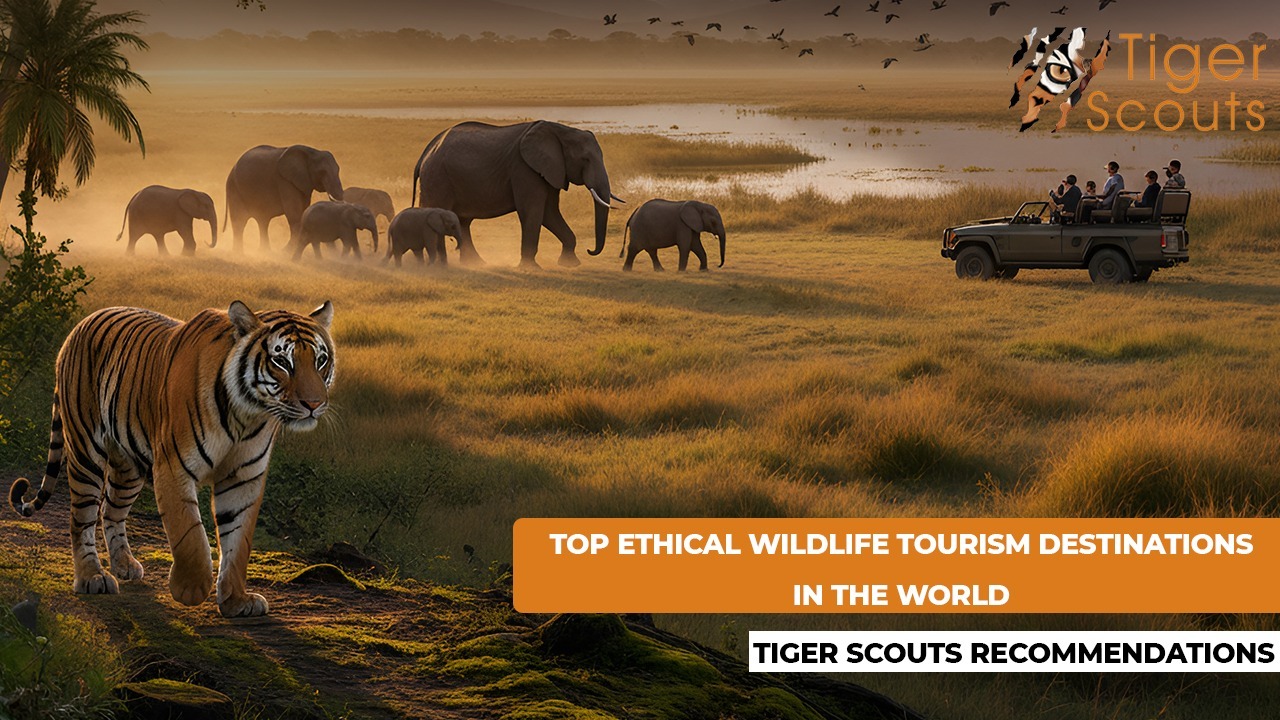
Ethical wildlife tourism is no longer a niche concept it has become a global responsibility. As travelers become more conscious of their environmental footprint, ethical wildlife tourism and responsible wildlife travel are shaping how people explore nature. Instead of exploiting animals for entertainment, ethical wildlife tourism promotes conservation, education, and respect for natural habitats.
At TIGER SCOUTS, we believe wildlife tourism should protect ecosystems, empower local communities, and ensure animals thrive in the wild. This guide explores the top ethical wildlife tourism destinations in the world, highlighting regions that prioritize wildlife conservation tourism over profit-driven exploitation.
What Is Ethical Wildlife Tourism and Why It Matters
Ethical wildlife tourism refers to travel experiences that allow people to observe wildlife responsibly while minimizing harm to animals and ecosystems. It rejects captivity-based entertainment and promotes conservation-driven travel.
Why Ethical Wildlife Tourism Matters
- Protects endangered species from exploitation
- Supports long-term wildlife conservation tourism
- Preserves fragile ecosystems
- Educates travelers on biodiversity protection
Ethical wildlife tourism also ensures animals are not forced into unnatural behaviors. Instead, it promotes observation in natural habitats, making responsible wildlife travel both educational and impactful.
Africa’s Best Ethical Wildlife Tourism Destinations
Africa remains the heart of ethical wildlife tourism in Africa, offering some of the world’s most successful conservation-driven safari experiences.
Top Ethical Safari Destinations
- Kenya (Maasai Mara)
- Tanzania (Serengeti National Park)
- Botswana (Okavango Delta)
- South Africa (private conservation reserves)
These destinations focus on safari conservation tourism, ensuring wildlife thrives without disturbance.
Why Africa Leads in Ethical Wildlife Tourism
- Community-led wildlife protection
- Anti-poaching initiatives
- Limited safari vehicle access
- Eco-certified lodges
Responsible Safari Guidelines
- No animal feeding
- No off-road tracking
- Safe distance from wildlife
Ethical wildlife tourism in Africa proves that safaris can protect animals while supporting local economies.
Ethical Wildlife Tourism Destinations in Asia
Asia is home to some of the world’s most endangered species, making ethical wildlife tourism in Asia crucial for conservation success.
Leading Ethical Wildlife Destinations
- India (Ranthambore, Kanha, Bandipur)
- Sri Lanka (Yala National Park)
- Nepal (Chitwan National Park)
- Thailand (certified elephant sanctuaries)
Elephant Sanctuaries in Asia
Ethical elephant sanctuaries in Asia focus on rescue, rehabilitation, and protection rather than rides or performances.
Signs of Ethical Elephant Sanctuaries
- No riding or chains
- Natural social groupings
- Large forested areas
- Veterinary-led care
Activities to Avoid
- Elephant bathing for selfies
- Circus-style shows
- Breeding for tourism
Ethical wildlife tourism in Asia directly supports species survival while preserving cultural respect.
Top Ethical Wildlife Experiences in South America
South America is a biodiversity hotspot, making ethical wildlife tourism South America vital for global conservation.
Amazon Wildlife Conservation Destinations
- Brazil (Amazon reserves)
- Peru (Tambopata National Reserve)
- Ecuador (Galapagos Islands)
The Amazon rainforest plays a critical role in climate stability and species survival.
Ethical Amazon Tourism Practices
Responsible Wildlife Experiences
- Guided rainforest walks
- Wildlife monitoring programs
- Indigenous-led eco-tourism
Conservation Benefits
- Rainforest preservation
- Protection of endangered species
- Sustainable livelihoods for locals
Amazon wildlife conservation proves that ethical tourism can protect ecosystems while educating travelers.
Ethical Wildlife Tourism in Australia and Oceania
Australia and Oceania are leaders in ethical wildlife tourism Australia, especially in marine conservation.
Top Ethical Destinations
- Great Barrier Reef (Australia)
- Kangaroo Island
- New Zealand marine reserves
Marine Wildlife Conservation Focus
Ethical Marine Tourism Practices
- Reef-safe snorkeling
- Whale watching at regulated distances
- Coral restoration programs
Wildlife Protection Measures
- No-touch marine policies
- Strict visitor limits
- Conservation research funding
Marine wildlife conservation in Oceania highlights how ethical tourism protects oceans while offering unforgettable experiences.
How to Choose Ethical Wildlife Tourism Destinations
Choosing ethical wildlife destinations requires awareness and responsibility.
Ethical Wildlife Travel Tips
What to Look For
- Conservation-focused operations
- No animal exploitation
- Transparent funding use
- Local community involvement
Responsible Tourism Guidelines
- Avoid animal selfies
- Respect wildlife distances
- Follow park regulations
- Support eco-certified operators
By following responsible tourism guidelines, travelers become active contributors to wildlife protection.
Conclusion
Ethical wildlife tourism is not about seeing more animals it is about protecting them. From ethical wildlife tourism in Africa and Asia’s elephant sanctuaries to Amazon wildlife conservation and marine wildlife conservationin Australia, responsible travel choices shape the future of our planet.
At TIGER SCOUTS, we encourage travelers to choose experiences that respect wildlife, protect habitats, and empower communities. Ethical wildlife tourism ensures that future generations will inherit a world where wildlife thrives freely.